
Brighton & Hove Albion are marking 125 years since their formation in 1901. Few English clubs can claim a story with such extreme contrasts. Within a single generation, Albion went from playing home games at a rival’s ground with the bailiffs circling to walking out at the Amsterdam Arena as genuine European contenders.
That journey is the real story behind this anniversary. It is not simply about survival, though survival was once far from guaranteed. It is about how a club stripped of its own stadium in 1995 rebuilt itself. Brick by brick and campaign by campaign, into an outfit capable of beating Ajax on their own turf in the Europa League.
From Goldstone Heartbreak to the European Stage
To understand what Brighton have achieved, you have to start with what they lost. The Goldstone Ground had been the club’s home for over 90 years before chairman Bill Archer sold it in 1995. Mounting debts left the board little room to manoeuvre.
The sale left Albion without a permanent home. For a period, without an obvious future. Supporters who had grown up watching football on the seafront suddenly faced the prospect of following a club with nowhere of its own to play.
Set against that backdrop, a 2-0 win in Amsterdam almost three decades later feels like a different club entirely. The gap between those two moments is the story of everything Brighton fans fought for in between.
Exile, Withdean, and the Battle for the Amex
With the Goldstone gone, Brighton were forced into exile. The club spent two seasons ground-sharing at Gillingham. A 150-mile round trip for home fixtures that tested even the most committed supporters’ patience.
Relief came in 1999. Albion returned to Sussex and began playing at the Withdean Stadium, a converted athletics venue with a capacity far below what a club of Brighton’s stature needed. It was a stopgap, not a solution, and everyone connected to the club knew it.
What followed was a long and often bitter campaign to secure a proper home. Objectors fought planning applications for years. Supporters organised, lobbied and protested to keep the project alive. For campaigners like Paul Samrah, the moment planning permission finally came through stands out above almost everything else in his years of following the club.
“After the years of campaigning, the days and nights I spent fighting for regime change and then for the stadium. The moment I heard we’d actually got planning permission, that our objectors had decided not to continue their fruitless efforts to stop the stadium… We’d won our battle.”
That victory, secured in August 2007, cleared the way for what became the Amex Stadium. The ground has since hosted Premier League and European football. Without that campaign, and without supporters like Samrah refusing to let the issue drop, there is no guarantee Brighton would still exist in anything like their current form.
Tony Bloom’s Era and European Victory in Amsterdam
Tony Bloom took over as chairman in 2009, arriving at a club still finding its feet after the Withdean years and the fight for a new stadium. His tenure has coincided with Brighton’s rise from the lower leagues to sustained Premier League football and, eventually, European competition.
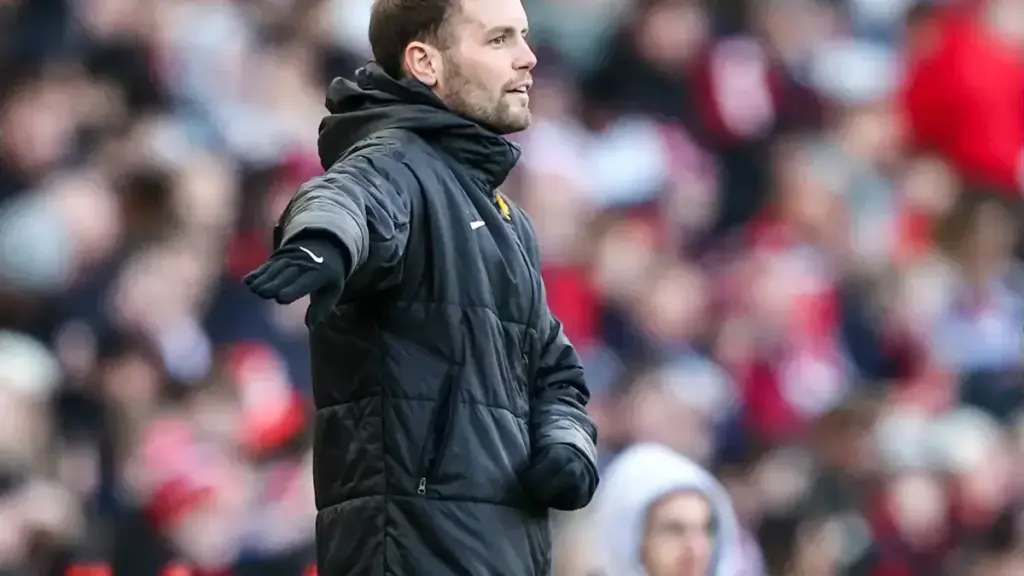
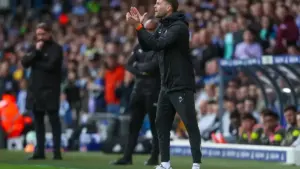
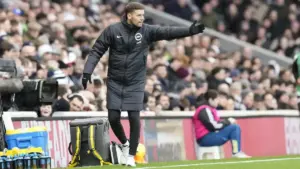
Nowhere was that transformation more visible than at the Amsterdam Arena on 9 November 2023. Roberto de Zerbi’s Brighton side faced Ajax in the Europa League. Before kick-off, de Zerbi addressed his players inside the away dressing room. The effect on those who heard it was immediate.
“It made the hairs on the back of my neck stand up.”
Said a long-standing senior Brighton official, reflecting on the pre-match talk. Brighton went on to win 2-0, a result that would have seemed almost unimaginable to anyone following the club through the Withdean years. A team once ground-sharing at Gillingham was now winning away from home in one of European football’s grand old stadiums. That night in Amsterdam followed a period in which de Zerbi’s methods reshaped how Brighton played. De Zerbi’s lasting influence is still referenced by players who worked under him.
A Modern Identity and the Next 125 Years
The scale of the change since those dark days after the Goldstone sale is not lost on those who work inside the club today. Technical director Mike Cave has watched the transformation up close.
“Anyone walking into Brighton today compared to even 15 years ago would not think it was the same football club,”
Cave said, a verdict that captures the distance travelled since Bloom’s arrival. The club’s academy, recruitment model and infrastructure now bear little resemblance to the institution that once faced losing its home altogether. That same resilience showed again this season, with the dramatic cup comeback at Old Trafford a reminder that fighting spirit still runs through the current squad.
None of this erases what supporters endured in the 1990s, nor should it. The anniversary is a chance to honour that generation of fans, the ones who kept turning up at Gillingham and Withdean, and the campaigners who refused to let the club disappear. For a fuller account of the club’s history, the BBC Sport anniversary report traces the journey in detail.
What matters most, 125 years on, is that Brighton’s identity now stretches far beyond survival. The club that once had no ground to call its own has built something durable, and that foundation is what supporters carry into the next chapter.


Comments.
Loading comments…